Climate change: the defining issue of the twenty-first century
Carbon dioxide is the main anthropogenic greenhouse gas. It is responsible for about 66% of its effect.
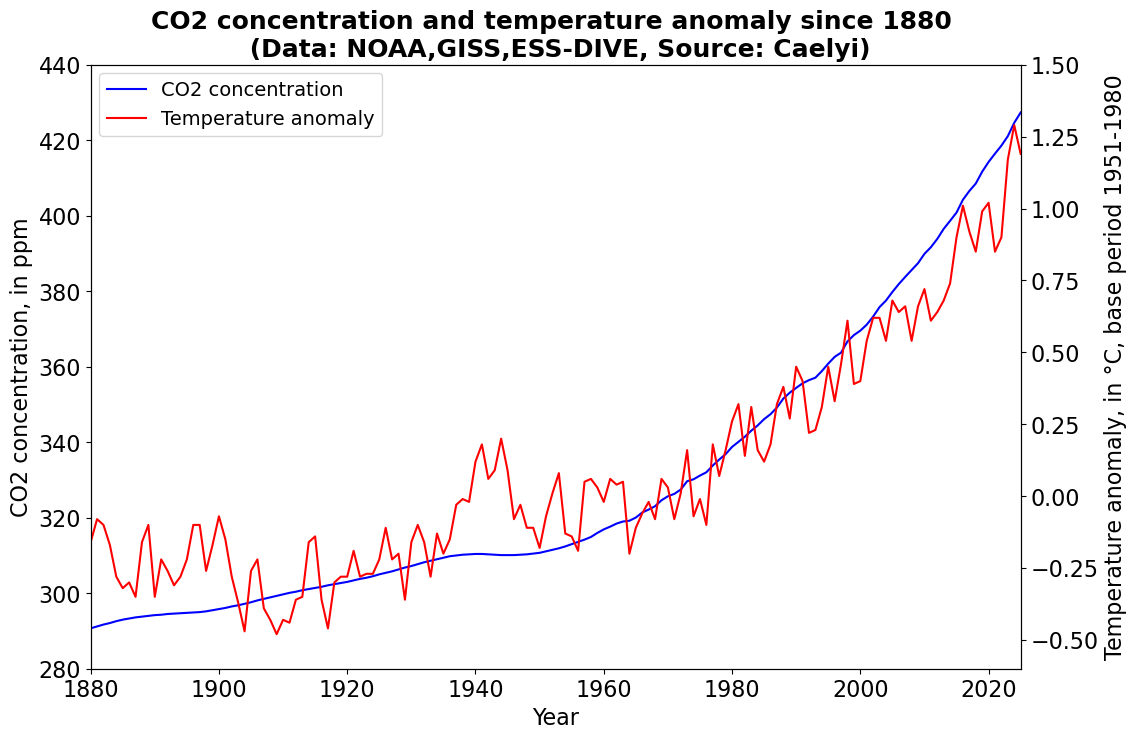
Since the pre-industrial era, the carbon dioxide concentration in the atmosphere has risen by 52%, from 280 ppm to 427 ppm.
Most of this growth has occurred since 1970 and has come directly from fossil fuel combustion. Indeed, fossil fuels account for 80% of the global energy mix.
This sharp increase has had a critical impact on the average global temperature on Earth, which has grown by 1.4°C since the pre-industrial era.
The pace and the intensity of climate change are key issues, as well as its magnitude.
Methane is the second main anthropogenic greenhouse gas. It explains about one-third of the global human-induced greenhouse effect.
Over 20 years, it is 81 times more potent than CO₂ (28 times over 100 years). That is the Global Warming Potential, GWP, a key indicator.
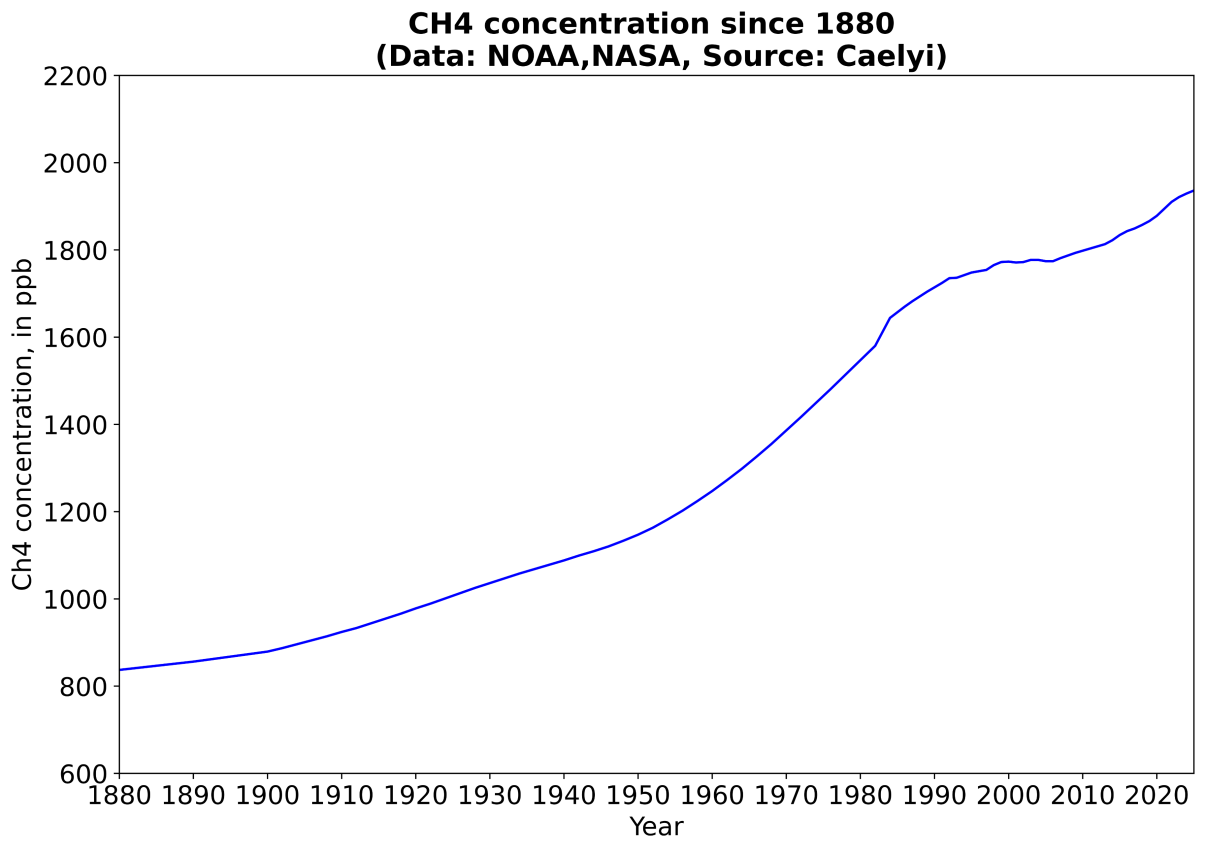
Since 1880, the methane concentration has risen from 837 ppb to 1936 ppb. That increase is directly due to the growth of human activities, which account for 60% of global methane emissions (fossil fuel uses, agriculture, etc.).
Since 2021, 159 states have signed the "Global Methane Pledge", GMP, whose goal is to reduce CH₄ emissions by 30% between 2020 and 2030.
That goal seems nevertheless unreachable given the current levels of methane emissions.
Since 2000, global fossil CO₂ emissions have sharply increased, mainly because of China's emissions, which have almost tripled in 20 years. That growth is nevertheless waning.
China's CO2 emissions account for 31% of global CO2 emissions, the United States' ones 13%, and Europe's ones 10%. It is worth noting that India's emissions are ramping up and that its relative share is growing.
Those numbers must naturally be weighted by the size of the populations and by the historical responsibility of developed countries for climate change.
Coal use is a defining issue of climate warming. According to the GCP, about 41% of global CO2 emissions come from coal. China's coal consumption accounts for about 50% of the global coal consumption.
The COVID-19 crisis has had a significant impact on emissions.

The Carbon Majors website has tracked the carbon emissions of 178 entities between 1854 and 2024, primarily investor-owned and state-owned companies in the fossil fuel and cement sectors. Those entities have represented about 70% of fossil fuel and cement CO₂ emissions since the preindustrial era.
Given the historical evolutions and the missing data, a reprocessing has been necessary to analyze this information. It is thus possible to identify the main emitter companies and to count their carbon emissions (Scope 1 and 3).
If we take into account the cumulative CH₄ and CO₂ emissions, it turns out that the TOP 20 emitter companies have emitted 652 GTCO₂e since 1854. The top emitter company is Saudi Aramco.
Among those companies, twelve are state-owned companies and eight are investor-owned companies. Five are American, three British and two Chinese.

Hundreds of millions of people have been affected by climate warming. Its intensity is unprecedented in history and its effects (heatwaves, droughts, floods, storms, sea level rise, etc.) will increase within the next decades. But to what extent ?

